
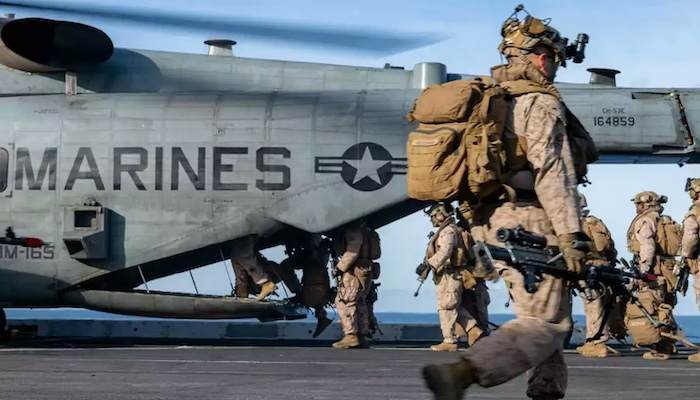
Cuba rejects US troop deployment in the Caribbean, calling it aggressive, unjustified, and harmful to Latin American and Caribbean sovereignty.
The United States government has imposed a new round of harsh sanctions aimed at tightening its decades-long economic war on Cuba – punishment for carrying out a socialist revolution.
These measures are accompanied by continual threats of military action against Cuba.
Washington’s latest executive order expands sanctions across key sectors of the Cuban economy — including energy, finance, mining, and defence. For the first time, it threatens penalties against non-US individuals and organisations engaging with Cuba.
These measures are part of a broader escalation of pressure on Cuba and violation of its sovereignty, including:
• An intensifying oil blockade contributing to major energy shortages
• Moves toward indicting Cuban leaders
Cuba continues to staunchly defend its independence, while expressing willingness for dialogue and peaceful relations. On May 1, millions mobilised in cities and towns in defence of their sovereignty and socialist revolution.
Stand in solidarity.
Bring others and make your voice heard:
- No to war threats against Cuba
- End the economic blockade
- Respect Cuba’s sovereignty
Solidarity with Cuba
Dear friends and members of the Cuba solidarity movement in New Zealand,
We invite you to actively join and support the global campaign “Firmo por Cuba” by signing and sharing the initiative through the official portal: www.firmoporcuba.com
This campaign is an important expression of solidarity with Cuba and a collective call against the blockade and all forms of aggression affecting the Cuban people.
We kindly ask all of you to help spread the campaign as widely as possible among friends, organizations, unions, academic sectors, community groups, social movements, and all people of goodwill who support justice and international solidarity.
Please also help amplify the campaign through social media and public activities. We encourage you to take photos and short videos while signing or promoting the campaign, so we can collectively increase its visibility and impact across New Zealand and internationally.
Your participation and support are essential to making this campaign a success.
Thank you very much for your solidarity and continued commitment to Cuba.
Warm regards,
Annalucia Vermunt
For the Auckland Cuba Friendship Society
ph 021 201 7399
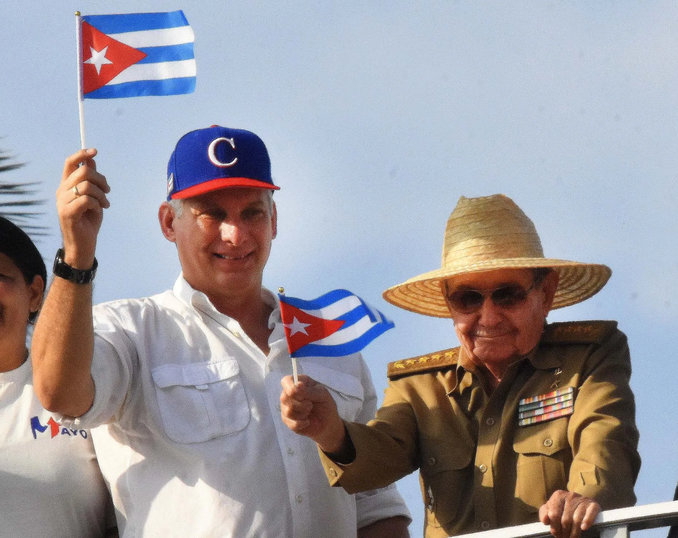
Cuban President Miguel Díaz-Canel with Raúl Castro, one of the historic leaders of the Cuban Revolution. Washington’s threatened indictment of Raúl Castro is aimed not only at one man, but at the revolution Cuba has defended for more than six decades. Photo: Bill Hackwell
U.S. revives a 30-year-old CIA provocation to threaten Cuba with invasionThe Justice Department is moving to indict 94-year-old Raúl Castro, one of the historic leaders of the Cuban Revolution, over Cuba’s 1996 shootdown of two planes flown by Brothers to the Rescue — not a humanitarian group, but one arm of a U.S.-created anti-Cuba terrorist network rooted in the CIA’s war against the Cuban Revolution.
https://www.struggle-la-lucha.org/2026/05/16/u-s-revives-1996-shootdown-case-to-threaten-cuba-with-invasion/
Cuba’s role fighting the Ebola crisis
A new strand of Ebola has occurred in the DRC and Uganda that they have no vaccine to treat. In 2014 Cuba was able to mobilise brigades of doctors to go. Today they have been blocked from doing that by the US sanctions. They have doctors on the ground in both countries but bigger mobilisations are blocked.
In 2014 Mike Treen wrote an article on Cuba’s medical revolution and how essential Cuba’s role was to combatting the outbreak of the Ebola virus at that time. It is accessible here: The remainder of this article is an attempt to update parts of that article that remain important and relevant today.
Cuba’s single-country contribution of trained doctors and nurses sent to Africa dwarfed that of any other single country. Those sent so far are selected from 15,000 trained Cubans who had volunteered to go. Cuba has a pool of health professionals without equal in the world. The October 22, 2014, Guardian reported the ethical outlook motivating the Cubans:
Speaking before they flew to Liberia, two Cuban doctors told Reuters that competition to join the West African mission – which attracted 15,000 volunteers – had been fierce. “There have been fights breaking out, heated arguments, with some doctors asking, ‘How come my colleague gets to go and I can’t?’,” said Dr Adrian Benítez. His colleague Leonardo Fernández said the volunteers had felt compelled to help. “We know that we are fighting against something that we don’t totally understand. We know what can happen. We know we’re going to a hostile environment,” he said. “But it is our duty. That’s how we’ve been educated.”
The capitalist approach to medicine can be seen in a New York Times report on October 23, 2014, saying that the lack of a vaccine for Ebola at that time was because it wasn’t profitable to produce one:
Almost a decade ago, scientists from Canada and the United States reported that they had created a vaccine that was 100 percent effective in protecting monkeys against the Ebola virus. The results were published in a respected journal, and health officials called them exciting. The researchers said tests in people might start within two years, and a product could potentially be ready for licensing by 2010 or 2011.
It never happened. The vaccine sat on a shelf. Only in 2014 was it brought out to begin undergoing the most basic safety tests in humans — with nearly 5,000 people dead from Ebola and an epidemic raging out of control in West Africa. Its development stalled in part because Ebola is rare, and until now, outbreaks had infected only a few hundred people at a time. But experts also acknowledge that the absence of follow-up on such a promising candidate reflects a broader failure to produce medicines and vaccines for diseases that afflict poor countries. Most drug companies have resisted spending the enormous sums needed to develop products useful mostly to countries with little ability to pay.
Drug companies are willing to spend billions of dollars on treatments for wealthy people in wealthy countries but care little for poor people in poor countries. The ideal drug is in fact something that doesn’t actually cure people but prolongs a person’s life and requires repeat prescriptions. Diseases that kill tens of millions of people in poor countries get little attention.
This includes diseases like Malaria, Dengue Fever, Lassa Fever and now Ebola. The World Health Organisation estimated between 50 and 100 million people are infected with Dengue every year and 25,000 die. Lassa Fever infects 300-500,000 a year and kills 5,000.
The Cuban government proposed as far back as 2002 to send 4,000 doctors to Africa in a special offensive to radically expand the Aids treatment programme in that continent and save millions of lives at risk. All they asked is that the rest of the world pay for the medicines and infrastructure needed. The idea was ignored. Cuba has treated millions of people in Africa, and millions have been saved but millions more could have been saved with the support of other countries. Cuban Foreign Minister Bruno Rodriguez told the UN General Assembly on September 27, 2014, that Cuba already had medical cooperation agreements with 32 African countries where 4000 specialists were working before deciding to extend them to the countries most affected by Ebola. The US, in contrast, has military cooperation agreements with 49 of the 54 countries on the continent.

